A quoting workflow for a lawn care business
A purpose-built web application that turned configurable service inputs into customer quote pages, PDFs and a reviewable administrative history.
Category: Historical custom application
Status: Historical project; current operation is not asserted
The problem
Preparing a service quote involved customer and property details, adjustable pricing inputs, generated documents and follow-up work. Keeping those steps in separate files or one-off scripts made the process harder to review and operate consistently.
The approach
Build one web workflow for residential and commercial quote requests, server-side quote generation, customer-facing artifacts and authenticated administrative follow-up, while keeping business settings and runtime records outside the application source.
Implementation
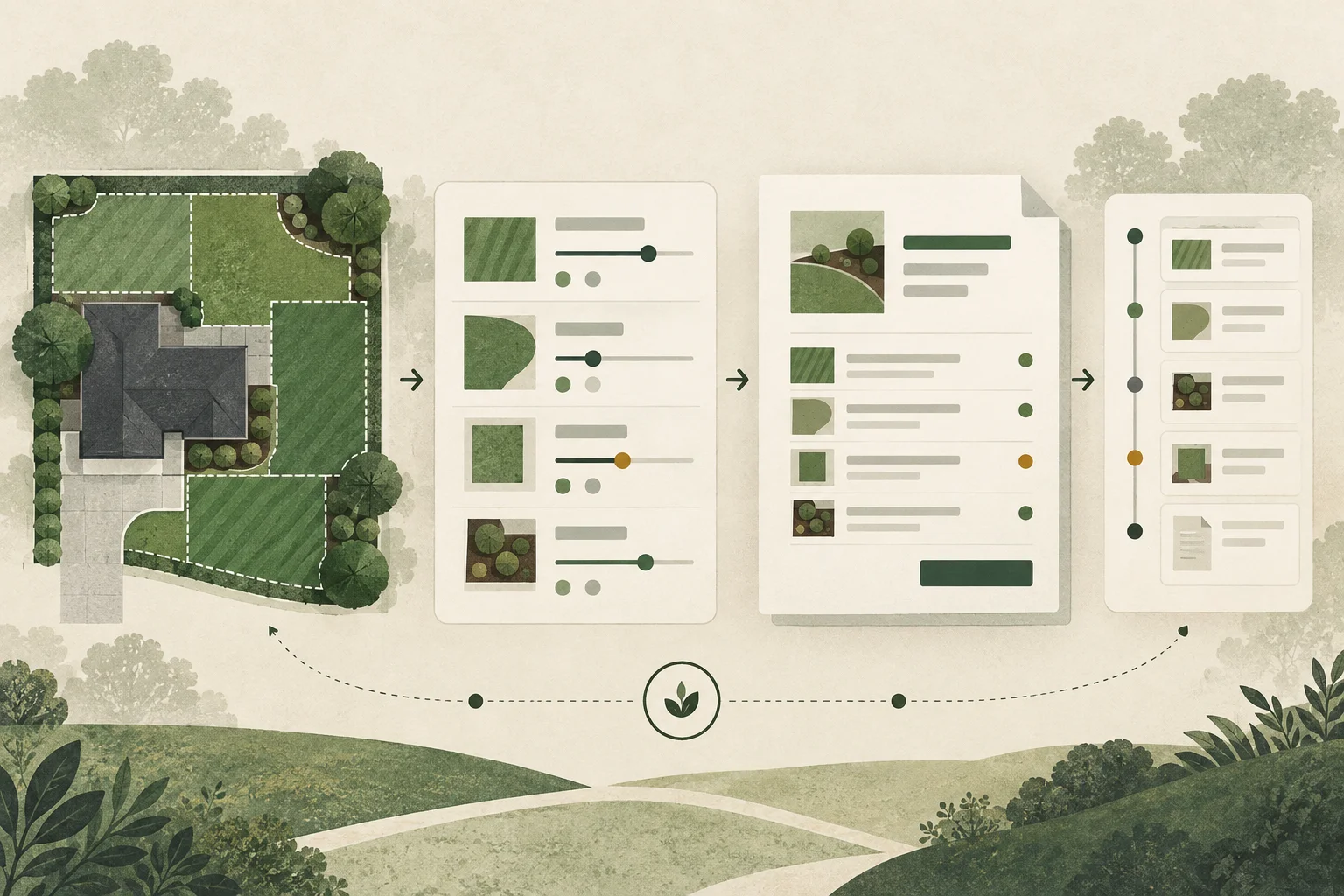
The application combined a public marketing site with residential instant-quote and commercial quote-request paths. Server-side validation and rate limits protected the public submissions. Configurable quote variables were loaded from application state before the quote engine generated customer-facing HTML and PDF output.
An authenticated administration area brought quote creation, customer and quote history, pricing inputs, email templates, site photos, account controls and audit information into one interface. Quote, customer, configuration and email-event records moved into SQLite-backed state, while generated artifacts and uploaded images retained explicit file-system lifecycles.
Public quote links used randomized access slugs rather than customer names or addresses. Follow-up actions required a separate action token, and operational guidance covered provider configuration, reverse-proxy deployment, smoke checks, encrypted backup contents and restore expectations.
Outcome and status
The repository records the transition from an older desktop-script workflow to a Linux-native web application with a public quote experience and administrative workflow. It demonstrates how business-specific rules can become a focused application instead of a collection of manual handoffs.
This is a historical project description. It does not claim that the application or the lawn care business is currently operating, that every documented production-readiness item was completed, or that the software is offered as a current hosted product. No customer records, real prices, private domains or business identity are included.
What this demonstrates
Custom software is most useful when it preserves the operating decisions around the calculation: which inputs are editable, what the customer receives, what staff can review later and how failures or follow-up remain visible.
Topics: Node.js, Express, SQLite, PDFKit, Email delivery, Operational documentation